
Private plane companies to compare
Private plane companies split into five types, each selling something different. The FAA's March 25, 2026 list counts 1,686 on-demand certificate holders. Match the provider type to your flying frequency, then verify the operator.

What each private plane company sells
Five kinds of private plane companies sell access to aircraft, and each one carries a different commitment and federal rule set. The table below sets out what you buy from each provider type and who flies the aircraft, with the rule that governs the arrangement.
A charter broker sells one trip at a time and names the operator in writing, sourcing the aircraft under 14 CFR Part 295. A charter operator, a direct air carrier, flies its own or managed aircraft under Part 135 and may also run aircraft management, an FBO or a Part 145 repair station (MRO) for other owners. A jet card sells a prepaid block, commonly 25 hours, flown under Part 135. Fractional ownership sells a share from one-sixteenth under Part 91 Subpart K, and a membership sells access to a fleet or per-seat flights, the latter under Part 380. Only the operator holds the certificate that covers your flight, so the name on the quote is the one to verify.
| Provider type | What you buy | Commitment | Who flies the aircraft | Federal rule set |
|---|---|---|---|---|
| Charter broker | One trip at a time, sourced from operators | None, pay per flight | A certificated operator named in the quote | 14 CFR Part 295 |
| Charter operator | One trip on its own or managed aircraft | None, pay per flight | The operator itself | 14 CFR Part 135 |
| Jet card | A block of prepaid flight hours | Deposit up front, commonly sold in 25-hour blocks | The program operator or its vetted partners | Part 135 for the flights |
| Fractional ownership | A share of one aircraft, from one-sixteenth | Multi-year contract plus monthly and hourly fees | The fractional program manager | 14 CFR Part 91 Subpart K |
| Membership | Access to a fleet or to per-seat flights | Recurring dues, flights billed on top | The program operator or partners | Part 135, or Part 380 for per-seat public charters |
Rule references: Title 14 of the Code of Federal Regulations.

Airports where charter flights cluster
Teterboro, Van Nuys and Miami-Opa Locka are the three business-aviation fields this site models, and each sits close to a major city without the commercial-terminal crowds. Density altitude matters more than runway length at these airports in summer, so check the numbers before you book a hot-weather departure.
Teterboro's July density altitude of 1,700 ft is the mildest of the three; Van Nuys reaches 3,200 ft and Miami-Opa Locka 1,900 ft. A runway of 6,997 ft at Teterboro still limits some heavy jets on the hottest days, so the operator may move you to a larger field or a lighter aircraft.
Teterboro Airport
- KTEB code
- 6,997 ft runway
Teterboro Airport sits 9 ft above sea level with a 6,997 ft runway and four FBOs, so ground handling and hangar space are rarely the constraint. Its July density altitude of 1,700 ft and peak of 2,300 ft leave room for most classes. Only aircraft whose performance charts allow the day's density altitude can depart at full fuel, so ask the operator to confirm the figure for your departure time.

Van Nuys Airport
- KVNY code
- 8,001 ft runway
Van Nuys Airport is 802 ft above sea level with an 8,001 ft runway, and its July density altitude of 3,200 ft is the highest of the three airports here. The field's peak of 3,800 ft is the figure to check for a summer afternoon departure, because a light jet at that density altitude may need a longer takeoff run or a weight limit. Four FBOs handle ground traffic.

Miami-Opa Locka Executive Airport
- KOPF code
- 8,002 ft runway
Miami-Opa Locka Executive sits 8 ft above sea level with an 8,002 ft runway, the longest of the three, and its July density altitude of 1,900 ft stays well below Van Nuys. Four FBOs provide ground handling and hangar space. For international legs the operator files the manifest, and CBP clearance at a designated airport is a condition of the trip.


Routes where charter flights price out
New York to Miami is 949 nautical miles and flies nonstop in a light jet for about 2h 37m, estimated at $10,000 to $15,000. On that route a light jet covers the distance without a fuel stop, which keeps the estimate simple: one flight, one crew day, no positioning detour.
Longer legs change the class. New York to Los Angeles is 2,129 nautical miles, beyond a light jet's range, so the estimate moves to a super-midsize jet at 5h 03m and $36,500 to $50,500. Compare jet charter quotes on time and class together, not on the hourly rate alone, because a smaller aircraft with a fuel stop can cost more hours than it saves. Empty legs, where an operator repositions an aircraft and sells the return, can undercut these figures but rarely appear on the dates you want.
Guides to choosing a provider
Three guides go deeper on the choice: private plane memberships, air charter operators in the US, and how many private jets are in the US. Each one works from the same fetched figures and the same five provider types.
Private plane memberships
Private plane membership costs in 2026: compare jet cards and clubs with charter spend by hours. See turboprop to heavy jet estimates before you commit.
Air charter operators in the US
Air charter operators on the FAA's Part 135 list: 1,686 certificate holders and 10,894 aircraft as of Mar 25, 2026.
How many private jets are in the US
In the US, 18,165 business jets hold FAA registry. See how many private jets are in the US by state.



How to check private jet companies
Ask for the air carrier certificate number and match it to the FAA's Part 135 list before any deposit, because a broker quote alone does not show who flies. The table below lists six checks and where each one is answered, from the certificate and its aircraft listing to third-party audits, insurance and crew records.
Confirm the aircraft is on the operator's certificate, not just in a brochure, and request the operations specification listing. A written ARGUS TripCHEQ or Wyvern PASS report covers the operator and crew for the trip. For a broker, the 14 CFR Part 295 disclosure should name the operator, the aircraft type and the total price; if a quote omits any of the three, then ask for a revised one. Two pilots with current type ratings and recurrent training are the baseline, and the records are available on request.
| What to check | Where to check it |
|---|---|
| Air carrier certificate | FAA list of Part 135 certificate holders and aircraft |
| The aircraft is on that certificate | Operator's aircraft listing (operations specification D085), on request |
| Third-party safety audit | ARGUS, Wyvern or IS-BAO registries |
| Insurance | Certificate of insurance for the trip, on request |
| Broker disclosures | Written quote naming the operator, aircraft type and total price (14 CFR Part 295) |
| Crew | Two pilots, type ratings and recurrent training records, on request |

Aircraft classes and hourly prices
A turboprop charter starts at $2,200 to $3,500 an hour, the lowest band among the five classes this site prices. Light jets run $3,800 to $5,800, midsize jets $5,200 to $7,800, super-midsize jets $7,200 to $10,000 and heavy jets $9,500 to $14,500.
Hourly rates are estimates until an operator confirms the aircraft and crew for your dates. A turboprop holds 6 to 8 passengers, a light jet 4 to 7, a midsize 7 to 9, a super-midsize 8 to 10 and a heavy jet 10 to 14.
Turboprop
- 6-8 seats
- 300 kt cruise
- 1,500 nm range
Pilatus PC-12 NGX, Daher TBM 960

Light jet
- 4-7 seats
- 430 kt cruise
- 1,400 nm range
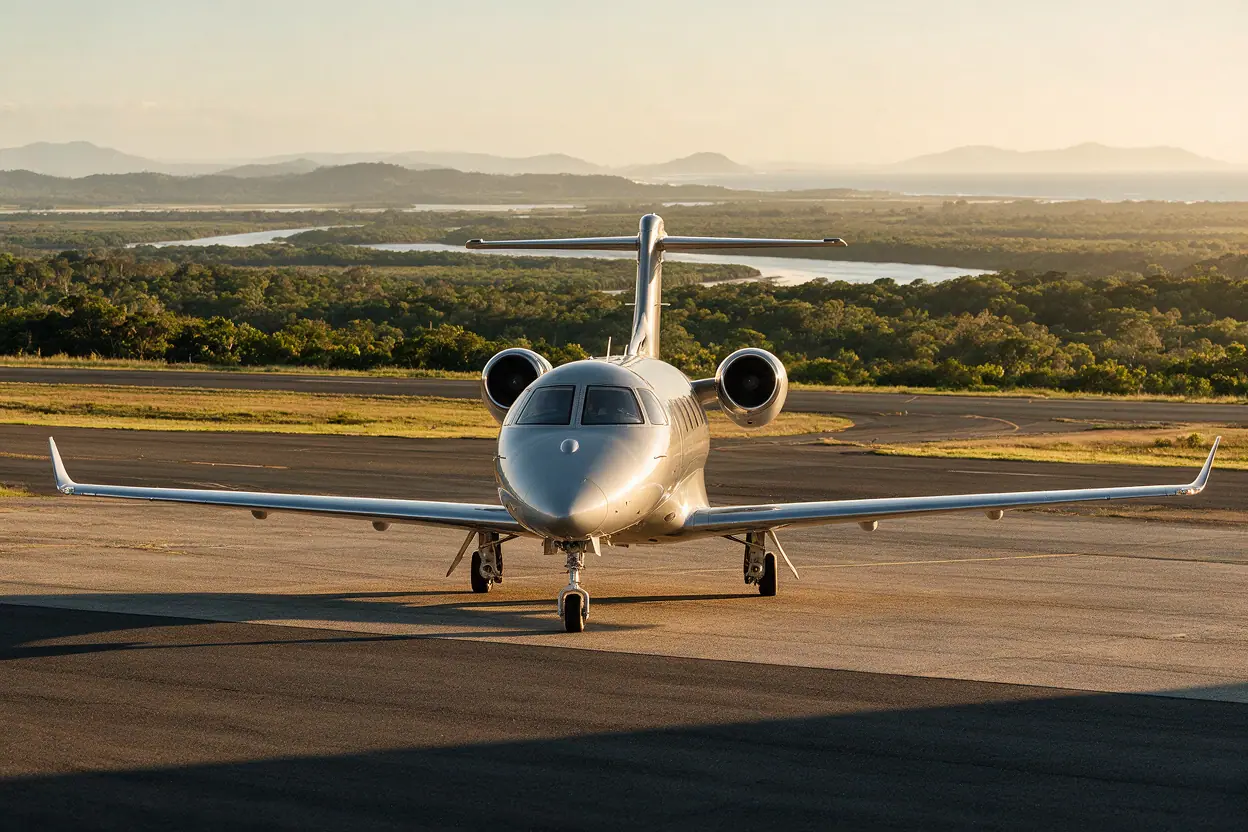
Embraer Phenom 300E, Pilatus PC-24
Midsize jet
- 7-9 seats
- 440 kt cruise
- 2,100 nm range
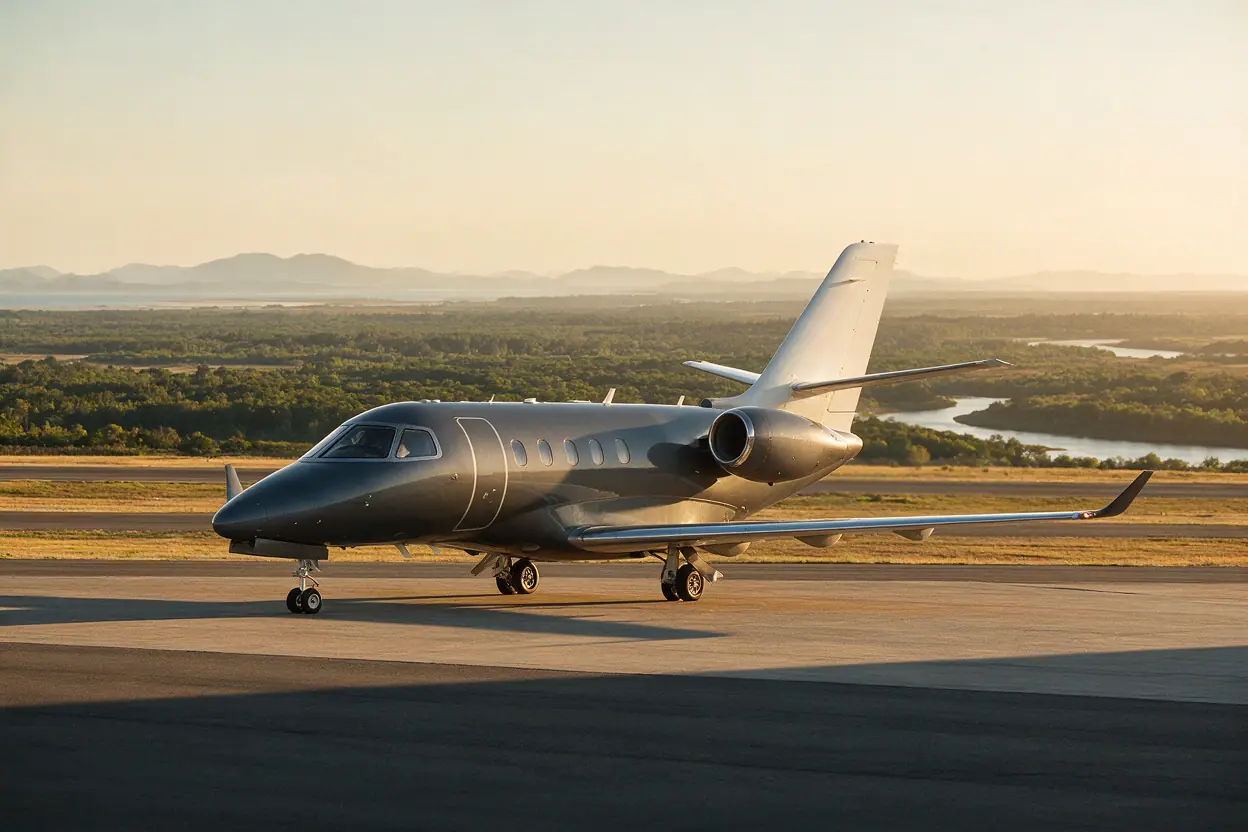
Cessna Citation XLS+, Cessna Citation Latitude
Super-midsize jet
- 8-10 seats
- 470 kt cruise
- 3,200 nm range
Cessna Citation X+, Bombardier Challenger 350
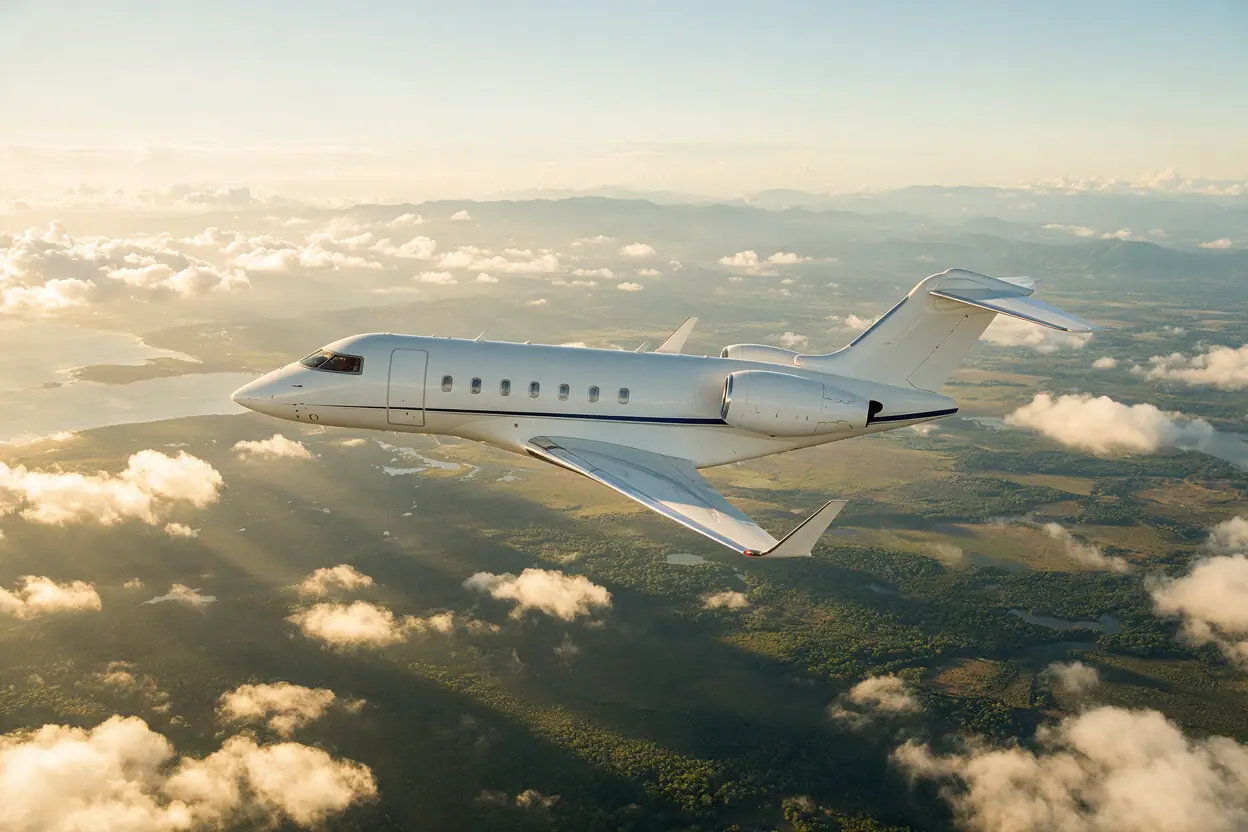
Heavy jet
- 10-14 seats
- 470 kt cruise
- 4,000 nm range
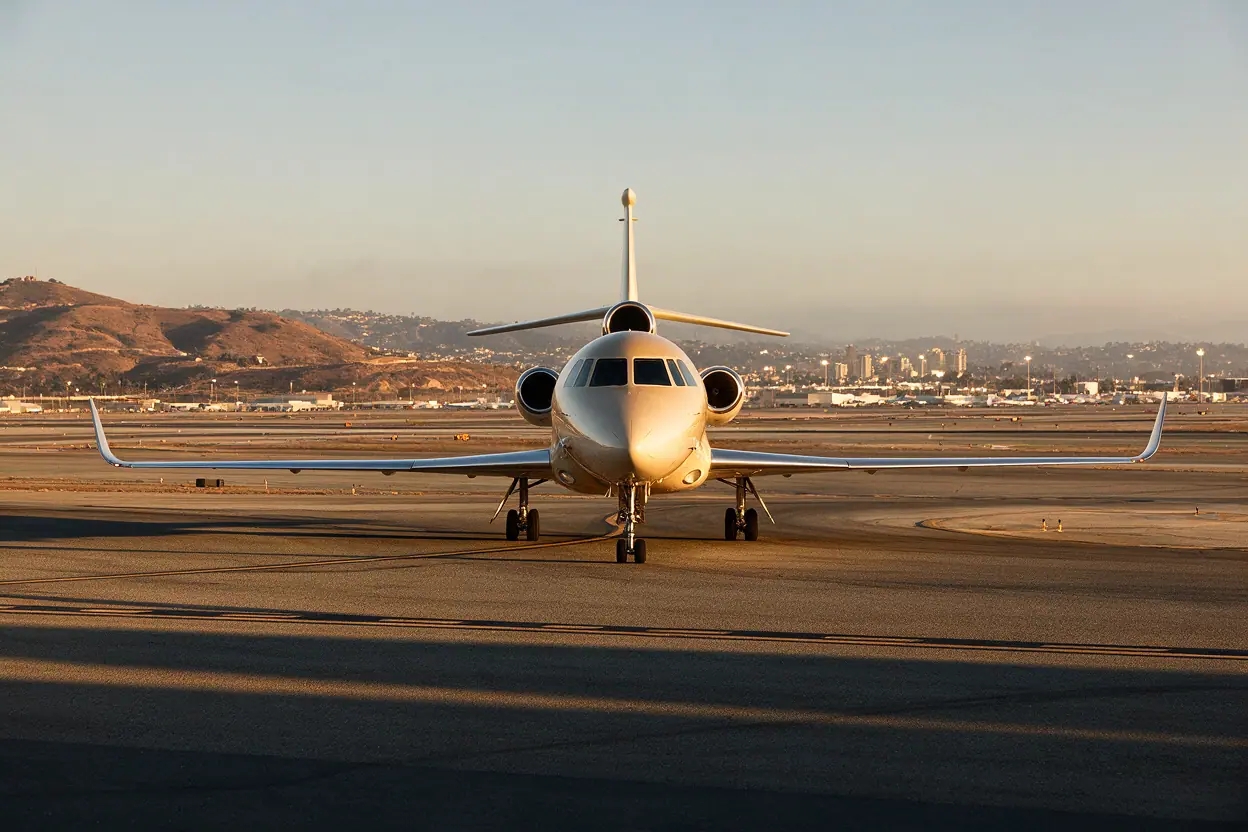
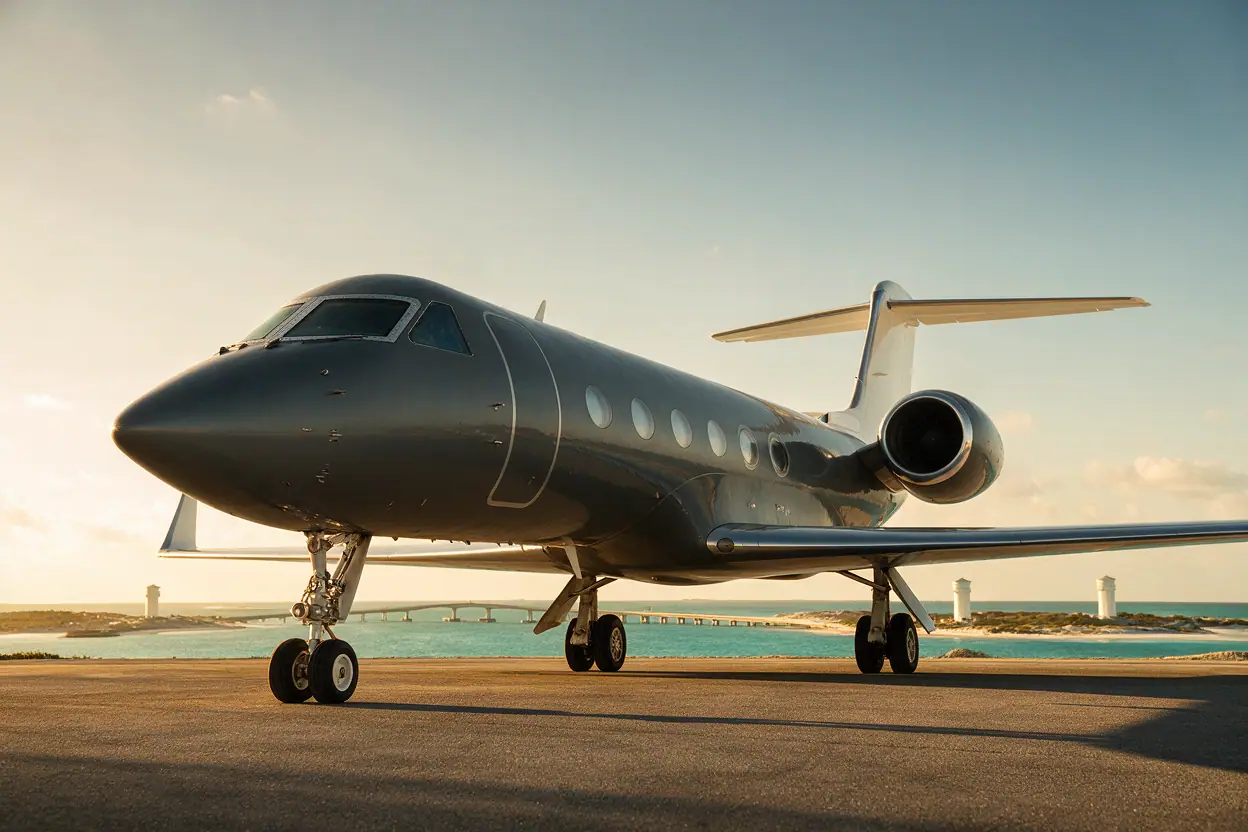
Dassault Falcon 900LX, Gulfstream G450

Number of these jets based in the US
18,165 business jets are on valid US registries. The leading models are:
Origin: FAA aircraft registry, valid registrations only, as of Nov 2, 2026. Each model is grouped by its type-certificate family.
| Aircraft | In US |
|---|---|
| Bombardier Challenger 300/350 | 868 |
| Cessna Citation Excel/XLS | 733 |
| Cirrus Vision Jet | 702 |
| Embraer Phenom 300 | 660 |
| Cessna CitationJet/CJ1 | 652 |
| Gulfstream IV/G450 | 610 |

How many charter operators the FAA lists
The FAA's Part 135 Operators and Aircraft list dated Mar 25, 2026 counts 1,686 certificate holders flying 10,894 aircraft. That total includes helicopters and piston aircraft, so the number of jet charter operators is smaller than 1,686, and the list is the reference point for checking any company.
Most of those companies are small. The same list shows 625 holders with one aircraft and 629 with two to five, while only 79 fly more than 20. A company with a single aircraft can be perfectly sound, but its schedule is limited by that one airframe, and an AOG day takes it out of service entirely.
| Aircraft on the certificate | Certificate holders |
|---|---|
| 1 aircraft | 625 |
| 2 to 5 aircraft | 629 |
| 6 to 20 aircraft | 353 |
| More than 20 aircraft | 79 |
| All Part 135 certificate holders | 1,686 |
Source: FAA, Part 135 Operators and Aircraft, list dated Mar 25, 2026. The list covers every on-demand operator, including helicopters and piston aircraft.
Comparing private plane companies
Pick the provider type
Decide whether you need one trip (broker or operator), a block of hours (jet card), a share (fractional) or recurring access (membership). The type sets the commitment before any aircraft is chosen.
Size the aircraft to the route
Give the route distance and passenger count. A class whose range falls short of the distance needs a fuel stop, so the quote should use a larger class or state the stop.
Check the operator
Match the certificate to the FAA list, confirm the aircraft is on it, and ask for the audit report, insurance certificate and crew records. Do this before you pay a deposit.
Compare written quotes
Ask each source for a written quote naming the operator, the aircraft type and the total price. Treat every figure as an estimate until an operator confirms the aircraft and dates.
Sources and method
Each route estimate on this page is a great-circle distance plus a 5% routing allowance, flown at the class cruise speed, plus 0.3 hours for taxi, climb and descent, billed at the class hourly range with a one-hour minimum. Los Angeles to Las Vegas is 199 nautical miles, which at 430 knots plus the 0.3-hour allowance gives 0h 47m in a light jet, and the turboprop figure of 1h 00m uses the same allowance at 300 knots. Every figure is an estimate until an operator confirms it.
Fetched sources, each with its own date: the FAA Part 135 Operators and Aircraft list, dated Mar 25, 2026, which also gives the most listed type, the Pilatus PC-12 at 450 airframes; the FAA aircraft registry, dated Nov 2, 2026, counting 18,165 jets and 13,001 turboprops registered in the US. This site arranges charter as a broker, and every flight is flown by an FAA Part 135 certificated operator. About this page and contact details are on the site's about page.
Pricing questions
What kinds of private plane companies are there?
Five kinds: charter brokers, charter operators, jet card programs, fractional ownership and memberships. Each differs in commitment and rule set. A broker sells one trip at a time under 14 CFR Part 295 and names the operator in the quote. An operator flies its own aircraft under Part 135. Fractional shares run under Part 91 Subpart K, and a jet card commonly sells 25-hour blocks.
How much do private aircraft cost per hour?
Hourly rates run from $2,200 to $3,500 for a turboprop, $3,800 to $5,800 for a light jet, $5,200 to $7,800 for a midsize jet, $7,200 to $10,000 for a super-midsize and $9,500 to $14,500 for a heavy jet. These are estimates based on the class hourly range, and the operator's confirmation sets the final figure.
Which is the best private jet company to book with?
There is no single best company; the right type depends on how often you fly. A one-off trip suits a broker or operator quote, while frequent flyers may prefer a jet card or fractional share. The FAA list dated Mar 25, 2026 shows 1,686 Part 135 certificate holders, so compare the certificate, audit report and written quote rather than the brand.
How much do private jet salesmen make?
This page holds no salary figures, so treat any commission number you see elsewhere as unverified. What the fetched data does show is company scale: the FAA list dated Mar 25, 2026 counts 625 certificate holders with one aircraft and 79 with more than 20, and pay structures vary with the size of the operator.
How do I verify private jet charter operators before paying?
Match the certificate number to the FAA Part 135 list dated Mar 25, 2026, then confirm the aircraft is on that certificate via the operations specification listing. Ask for the ARGUS, Wyvern or IS-BAO audit report, the certificate of insurance and crew training records. A broker's written quote should name the operator, aircraft type and total price.