
Private plane company fleets
Private plane company fleets span turboprops to heavy jets. A light jet costs $3,800 to $5,800 per hour, according to our 2026 table. The figures below help you compare aircraft before you request a charter quote.
- Main page
- Planes
When you request a quote through a charter broker, the aircraft you see come from the fleets of independent operators. This page organizes those jet types by class, with hourly rates and performance numbers, so you can match an aircraft to a route before you call. The table below lists the aircraft models and classes we track, with passenger counts, cruise speeds, and range for each jet. Use it to narrow the field, then ask for a quote on the specific route you need.
The figures here are estimates, drawn from publicly listed ranges for each class. Actual pricing depends on the operator, the date, the airports, and the number of flight hours. Your quote will include crew, fuel, and fees, and it is confirmed only when an operator accepts the trip. For a quick comparison, start with the class that fits your passenger count and range, then look at the specific jets within that class.
Number of these jets based in the US
Valid US registrations cover 18,165 business jets and 13,001 turboprops on the FAA registry; 905 of the jets sit in fractional ownership, and the typical jet dates to 2008.
| Aircraft | Grouped under | In US | Leading state |
|---|---|---|---|
| Pilatus PC-12 NGX | Pilatus PC-12 series | 1,426 | Texas (124) |
| Daher TBM 960 | TBM 700-960 series | 987 | Delaware (117) |
| Embraer Phenom 300E | Phenom 300 series | 660 | Ohio (81) |
| Pilatus PC-24 | Pilatus PC-24 | 200 | New Hampshire (22) |
| Cessna Citation XLS+ | Citation Excel/XLS series | 733 | Texas (80) |
| Cessna Citation Latitude | Citation Latitude | 392 | Utah (12) |
| Cessna Citation X+ | Citation X series | 283 | North Carolina (46) |
| Bombardier Challenger 350 | Challenger 300/350 series | 868 | Utah (120) |
| Dassault Falcon 900LX | Falcon 900 series | 403 | Texas (48) |
| Gulfstream G450 | Gulfstream IV/G450 series | 610 | California (86) |
Origin: FAA aircraft registry, valid registrations only, as of Nov 2, 2026. Each model is grouped by its type-certificate family.
States with most business jets
| State | On register |
|---|---|
| Texas | 1,671 |
| Utah | 1,578 |
| Florida | 1,569 |
| Delaware | 1,556 |
| California | 1,044 |
| Ohio | 675 |
| Tennessee | 649 |
| North Carolina | 479 |
| New York | 460 |
| Kansas | 399 |
Turboprop
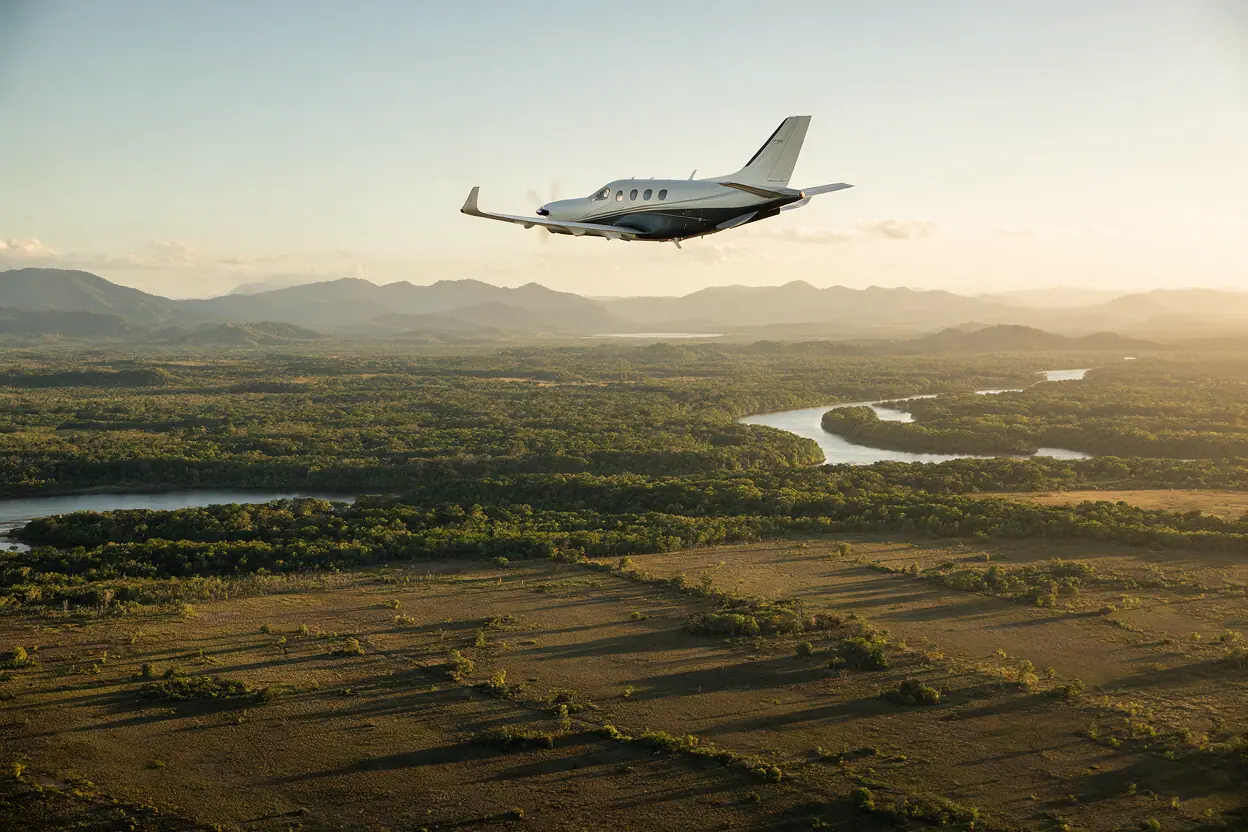
Turboprops such as the Pilatus PC-12 NGX and Daher TBM 960 cruise near 300 knots and handle runways that jets cannot. They burn less fuel per hour, with rates from $2,200 to $3,500, and carry six passengers in a cabin that is about 4 feet tall. For a short hop under 500 nautical miles, a turboprop can be the least expensive way to fly privately, though it is slower than a jet.
Pilatus PC-12 NGX
- 6 seats
- 290 kt cruise
- 1,800 nm range
The Pilatus PC-12 NGX is a single-engine turboprop that carries 6 passengers at 290 knots with a range of 1,800 nautical miles. Its cabin is 4 feet 10 inches tall and 16 feet 11 inches long, with 40 cubic feet of baggage space. It can use short runways and is often the most cost-effective option for regional flights.
Daher TBM 960
- 6 seats
- 330 kt cruise
- 1,730 nm range
The Daher TBM 960 is a single-engine turboprop carrying 6 passengers at 330 knots. Range is 1,730 nautical miles, and the cabin is 4 feet tall and 13 feet 3 inches long with 32 cubic feet of baggage. It is faster than the PC-12 but has slightly less cabin space.
Light jet
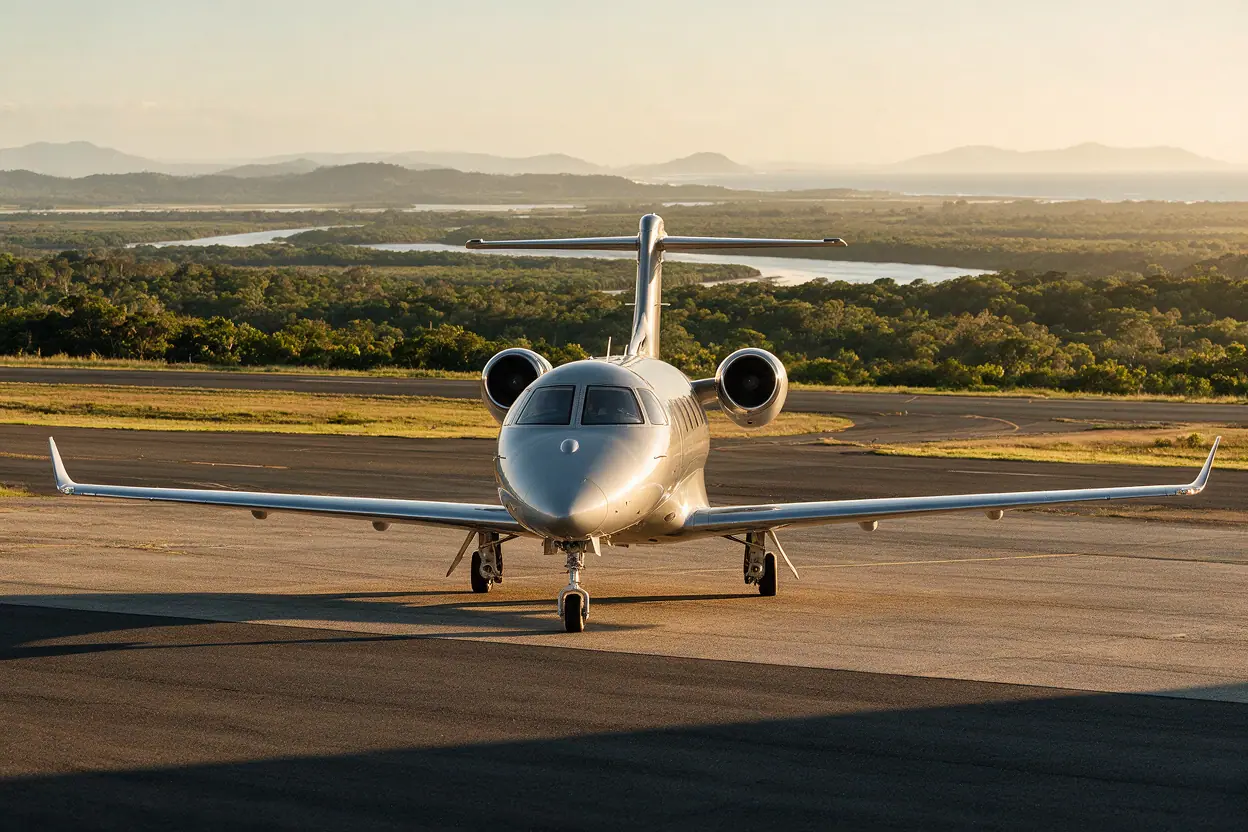
Light jets like the Embraer Phenom 300E cruise at 430 to 464 knots, and hourly rates run $3,800 to $5,800. Range reaches about 1,400 to 2,010 nautical miles. These jets fit short to medium routes and can use smaller airports with runways of 4,000 feet or more. Baggage space is limited compared with larger classes.
Embraer Phenom 300E
- 7 seats
- 464 kt cruise
- 2,010 nm range
The Embraer Phenom 300E is a light jet carrying 7 passengers at 464 knots. Range is 2,010 nautical miles, and the cabin is 4 feet 11 inches tall and 17 feet 2 inches long with 84 cubic feet of baggage. It is one of the faster light jets and can handle many short and medium routes.
Pilatus PC-24
- 8 seats
- 440 kt cruise
- 2,000 nm range
The Pilatus PC-24 is a light jet with 8 passenger seats, cruising at 440 knots with a range of 2,000 nautical miles. The cabin is 5 feet 1 inch tall and 23 feet long, and baggage capacity is 90 cubic feet. It can use unpaved runways, which few jets can, and offers more cabin space than most light jets.
Midsize jet
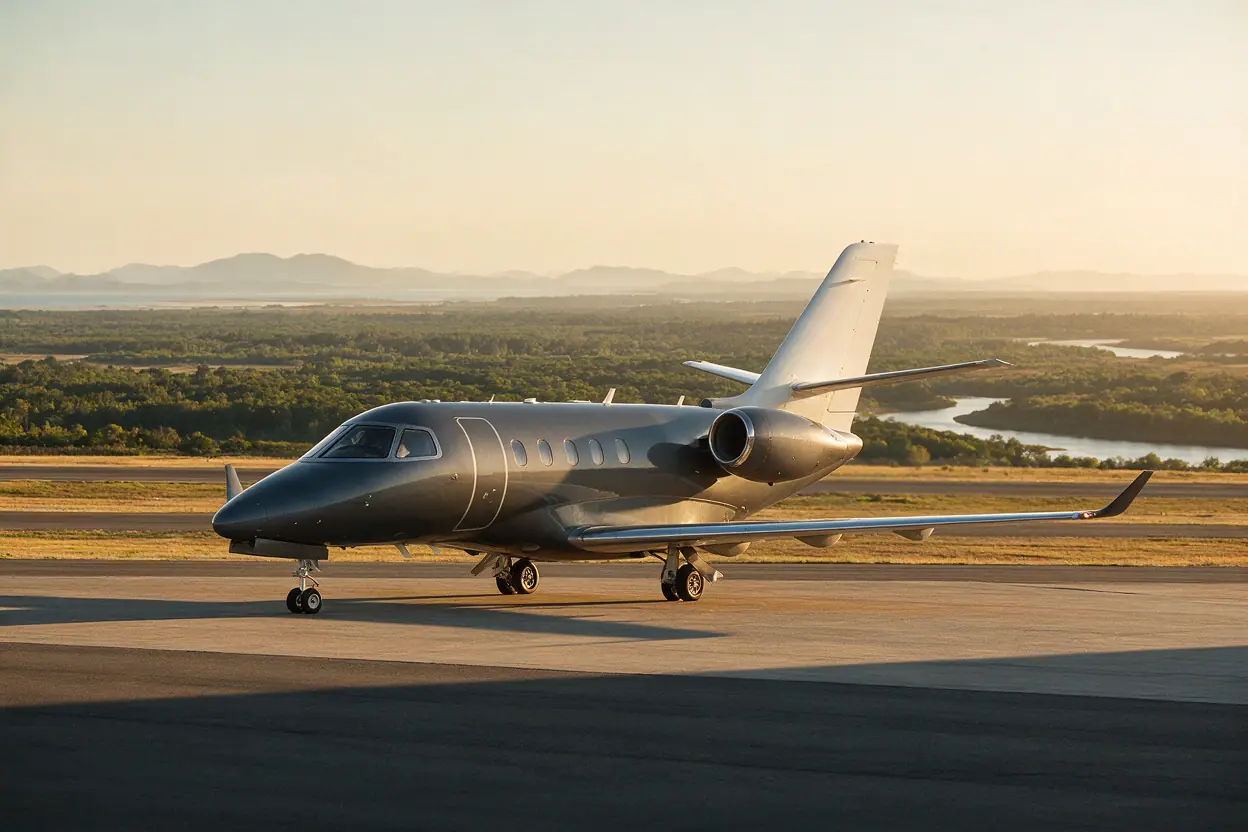
Midsize jets, including the Cessna Citation XLS+ and Citation Latitude, carry 7 to 9 passengers, with the Citation Latitude offering a stand-up cabin about 6 feet tall. Cruise speed is near 440 knots, and range reaches 2,100 to 2,700 nautical miles. Rates fall between $5,200 and $7,800 per hour. They suit transcontinental U.S. routes and offer more baggage capacity than light jets.
Cessna Citation XLS+
- 8 seats
- 441 kt cruise
- 2,100 nm range
The Cessna Citation XLS+ is a midsize jet carrying 8 passengers at 441 knots. Range is 2,100 nautical miles, and the cabin is 5 feet 8 inches tall and 18 feet 6 inches long with 90 cubic feet of baggage. It is a common choice for mid-range domestic flights.
Cessna Citation Latitude
- 9 seats
- 446 kt cruise
- 2,700 nm range
The Cessna Citation Latitude is a midsize jet with 9 passenger seats, cruising at 446 knots with a range of 2,700 nautical miles. The cabin is 6 feet tall and 21 feet 9 inches long, with 127 cubic feet of baggage. It offers a flat floor and more stand-up room than earlier midsize jets.
Super-midsize jet
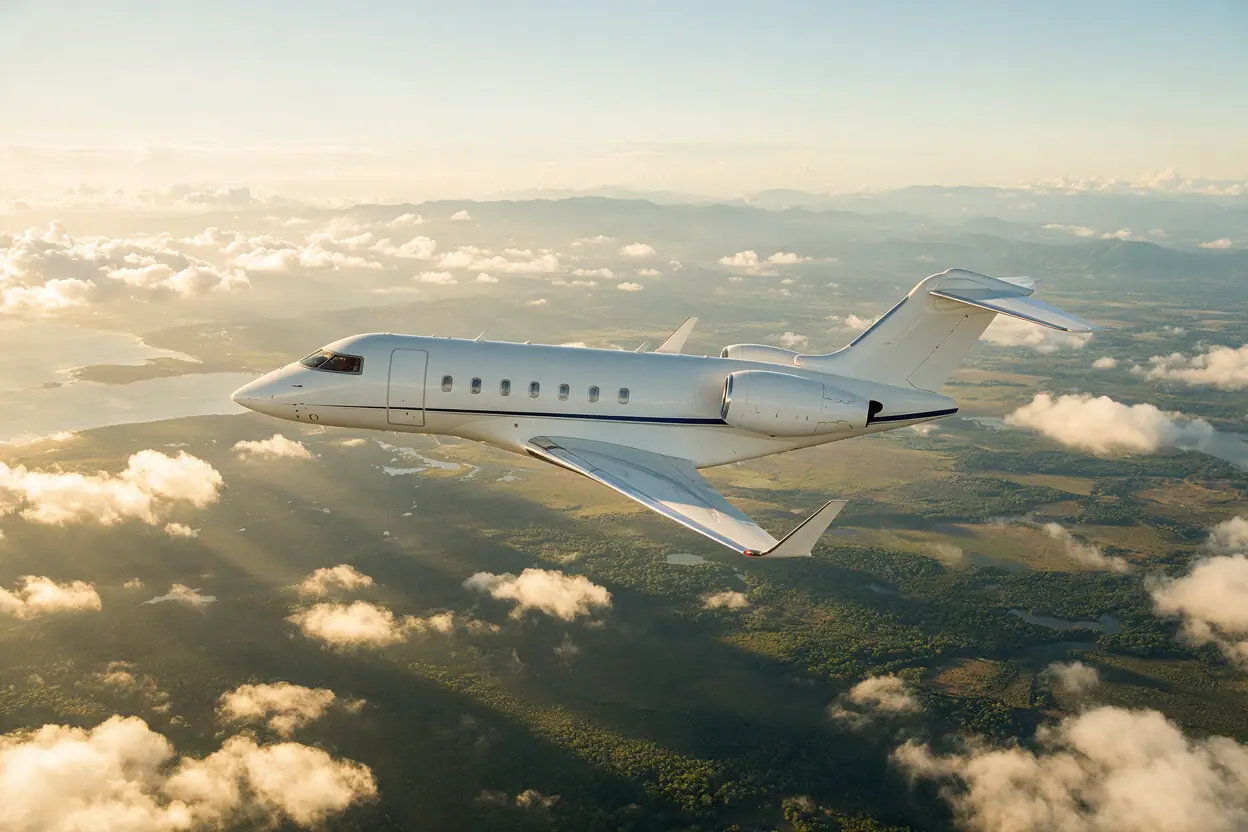
Super-midsize jets such as the Cessna Citation X+ and Bombardier Challenger 350 carry 8 to 10 passengers at up to 527 knots. Range reaches 3,200 to 3,460 nautical miles, enough for coast-to-coast flights with reserves. Hourly rates are $7,200 to $10,000. These jets offer a flat floor and more baggage space, and they can use many airports that heavy jets must skip due to runway length.
Cessna Citation X+
- 9 seats
- 527 kt cruise
- 3,460 nm range
The Cessna Citation X+ is a super-midsize jet carrying 9 passengers at 527 knots, the fastest cruise speed in this list. Range is 3,460 nautical miles, and the cabin is 5 feet 8 inches tall and 25 feet 2 inches long with 82 cubic feet of baggage. It suits long domestic routes where speed matters.
Bombardier Challenger 350
- 10 seats
- 470 kt cruise
- 3,200 nm range
The Bombardier Challenger 350 is a super-midsize jet carrying 10 passengers at 470 knots. Range is 3,200 nautical miles, and the cabin is 6 feet tall and 25 feet 2 inches long with 106 cubic feet of baggage. It has a flat floor and is often used for transcontinental flights.
Heavy jet
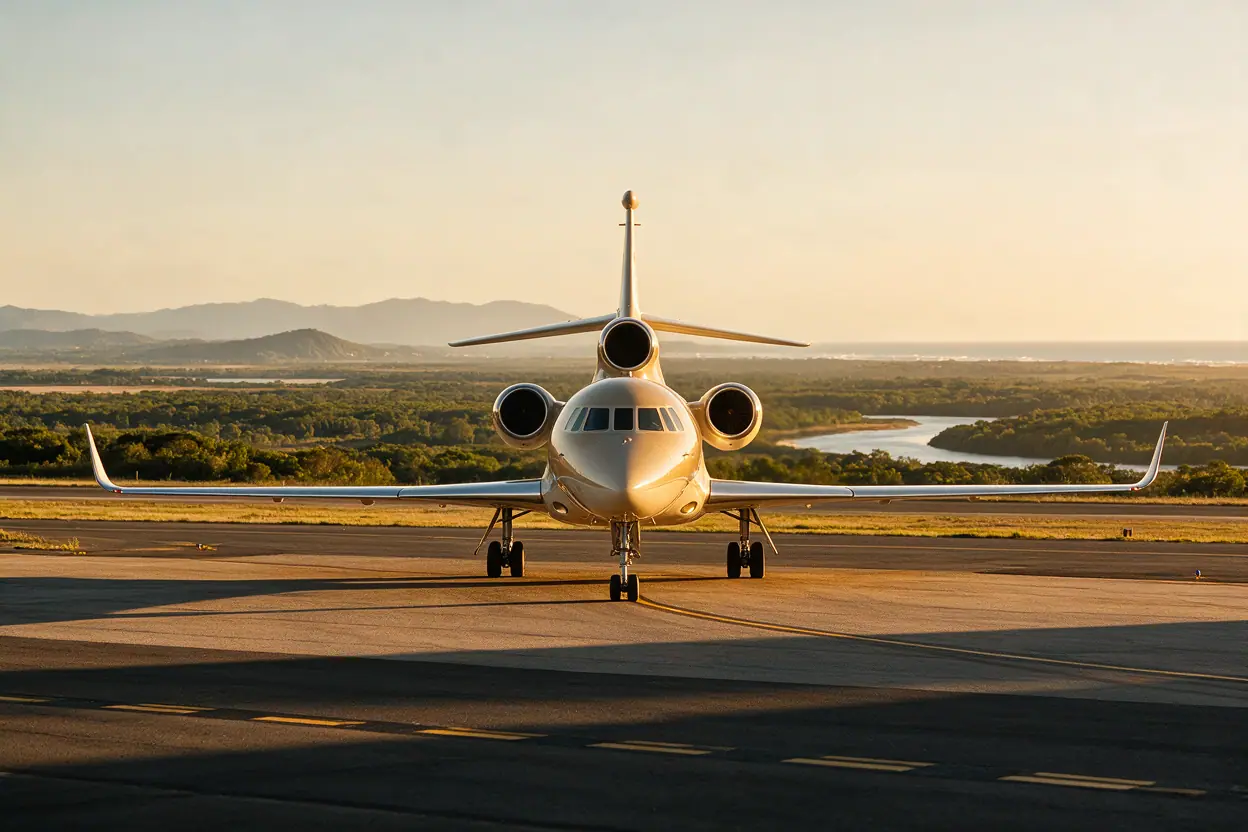
Heavy jets like the Dassault Falcon 900LX and Gulfstream G450 carry 10 to 14 passengers with cabins over 6 feet tall and 33 to 45 feet long. Range reaches 4,350 to 4,750 nautical miles, and rates are $9,500 to $14,500 per hour. They suit transatlantic or long domestic flights and offer the most baggage capacity, but they require longer runways and may not access smaller airports.
Dassault Falcon 900LX
- 12 seats
- 459 kt cruise
- 4,750 nm range
The Dassault Falcon 900LX is a heavy jet carrying 12 passengers at 459 knots. Range is 4,750 nautical miles, enough for transatlantic flights. The cabin is 6 feet 2 inches tall and 33 feet 2 inches long, with 127 cubic feet of baggage. It has three engines and can use shorter runways than some heavy jets.
Gulfstream G450
- 14 seats
- 476 kt cruise
- 4,350 nm range
The Gulfstream G450 is a heavy jet with 14 passenger seats, cruising at 476 knots with a range of 4,350 nautical miles. The cabin is 6 feet 2 inches tall and 45 feet 1 inch long, with 169 cubic feet of baggage. It offers the most cabin and baggage space in this list.
How to pick from private jet fleets
To choose from private jet company fleets, start with the route distance and passenger count, then filter by class. A route of 949 nautical miles, such as New York to Miami, suits a light jet that can fly it in 2 hours 37 minutes with no fuel stop. For a 2,129-nautical-mile trip from New York to Los Angeles, a super-midsize or heavy jet is needed, and a light jet would require a fuel stop.
Airport performance also matters: Teterboro's longest runway is 6,997 feet, while Van Nuys offers 8,001 feet. On a hot day, density altitude at Van Nuys can reach 3,800 feet, which reduces performance for some jets. Only certain aircraft can operate from short runways without weight restrictions. When comparing quotes, check that the aircraft listed can comfortably make the flight with your baggage and passenger load, and remember that prices are estimates until an operator confirms.
Questions
What are the different types of private jets in private plane company fleets?
Private jet fleets are typically grouped into light, midsize, super-midsize, and heavy jets, plus turboprops. Light jets carry 4 to 7 passengers at $3,800 to $5,800 per hour. Midsize jets carry 7 to 9 at $5,200 to $7,800 per hour. Super-midsize jets carry 8 to 10 at $7,200 to $10,000 per hour. Heavy jets carry 10 to 14 at $9,500 to $14,500 per hour. Turboprops carry 6 to 8 at $2,200 to $3,500 per hour.
What is considered corporate aviation?
Corporate aviation generally refers to the use of private aircraft for business travel, whether through charter, fractional ownership, or a jet card. A company might charter a light jet for a 2-hour flight between New York and Miami, paying an estimated $10,000 to $15,000, rather than booking commercial flights. The cabin and schedule are set by the business, and the aircraft comes from a charter operator's fleet.
What are the tax advantages of owning a fractional jet?
Fractional ownership can allow a business to depreciate its share of the aircraft and deduct operating costs, but the rules are specific and require tax advice. A one-sixteenth share of a $10 million jet is a $625,000 asset, and depreciation schedules apply. Charter and jet card programs are treated as expenses, not assets. Consult a tax professional before choosing fractional ownership over on-demand charter.
Which aircraft in private plane company fleets can fly New York to Los Angeles without a stop?
The New York to Los Angeles route is 2,129 nautical miles. Super-midsize and heavy jets fly the route nonstop, while a light jet would need a fuel stop. Flight time in a light jet is about 6 hours 15 minutes, and estimates for that leg run $23,500 to $36,000.
How do private plane company fleets affect charter prices?
Private plane company fleets set the supply of aircraft, so class and availability drive the estimate. A turboprop runs $2,200 to $3,500 per hour, while a heavy jet runs $9,500 to $14,500 per hour. On a busy route like New York to Miami (949 nautical miles), a light jet estimate is $10,000 to $15,000. Prices are estimates until an operator confirms the flight.
What should I check in an operator's fleet before booking a charter flight?
Check the aircraft's range against your route and its runway performance at the airports you'll use. A light jet with 2,010 nautical miles of range can fly New York to Miami (949 nautical miles) nonstop but would need a fuel stop for New York to Los Angeles (2,129 nautical miles). Also confirm the passenger and baggage capacity match your group, and verify the operator's FAA Part 135 certificate.